

Long Distance Moves Out of San Jose

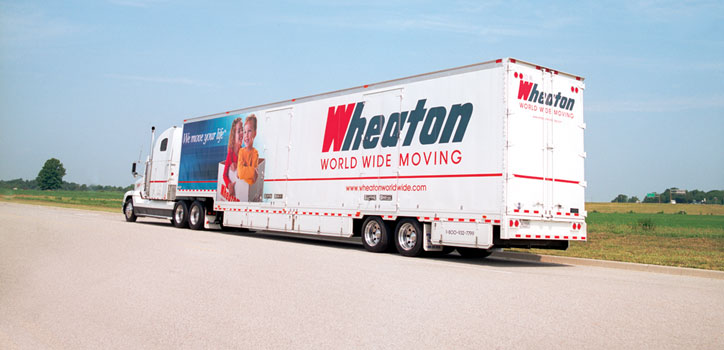
Move Pros is the top long distance moving company in San Jose. Back by national carrier Wheaton Van Lines, Move-Pros has the experience to do the move right and the staff to make you feel comfortable with the relocation. Long distance moves can be a big task. Move Pros will help you from the very start.

Contact us for a free consultation and schedule an appointment to get an estimate. Our trucks can take you anywhere across North America. International services are available as well.

CALL for an estimate on long distance moving in San Jose….877-203-1852

Recent Blog Posts

Hayward – Oakland – San Francisco – San Jose How to Help an Elderly Parent Move: A Complete Guide + Senior Moving Checklist Helping a parent leave the home they’ve lived in for decades is one of the hardest things a family can do. It’s a practical project with hundreds of decisions, and it’s also an emotional one, full of memories, worry and change. After more than 20 years as senior movers in the Bay Area, the Move-Pros team has learned what makes these moves go smoothly. This guide walks you through each stage, from the first conversation to the first night in the new home, and ends with a week-by-week Senior Moving Checklist you can print and use. Get a Free Quote Call (510) 907-9800 Download Checklist Start With the Conversation Before anything gets packed, talk with your parent about why a move makes sense and what they want from their next home. Common reasons include: Stairs, yard work or home upkeep have become hard to manage Health or mobility changes need more day-to-day support Living alone feels isolating or unsafe They want to be closer to children and grandchildren The family home is more space (and expense) than they need Keep the conversation about their goals: safety, independence, comfort and connection. When your parent feels heard and involved, the rest of the move goes far more smoothly. Choose the Right Type of Home The destination shapes the whole move. Most senior moves fall into one of these types: Assisted living and skilled nursing. Daily help with care and medication, usually in a private room or small apartment. Space is limited, so careful downsizing matters. Memory care. Secure care for people living with dementia or Alzheimer’s. Recreating a familiar room setup helps residents adjust. Independent living and retirement communities. Apartments or cottages in 55+ communities and CCRCs, with amenities and social activities. A smaller home, condo or apartment. Right-sizing to a space that’s easier and cheaper to maintain. Moving in with family. A bedroom or in-law unit in an adult child’s home. Once you’ve chosen a community, ask for the move-in date, the room’s floor plan and dimensions, and any building rules such as elevator reservations, approved moving hours and certificate of insurance requirements. Downsize With Care Downsizing is usually the hardest part of a senior move, and the place where starting early pays off most. Measure first. Use the floor plan to decide which furniture fits before you sort anything else. Sort into five groups: keep, store, give to family, donate and discard. Work one room at a time, in short sessions. A few hours a day is less tiring than a marathon weekend. Let your parent lead. Ask about the stories behind items, and let them choose what comes along. Prioritize comfort items. A favorite chair, familiar bedding, family photos and a few treasured decorations help a new room feel like home. Don’t force final decisions. Short- or long-term storage gives the family time to decide what to do with furniture and keepsakes. Get Professional Help Where It Counts You don’t have to do everything yourself. Senior movers can handle the parts that are physically demanding or time-consuming, including: Move planning and coordination with the new community Downsizing help, donation drop-off and debris removal Careful packing of china, heirlooms, photos and artwork Unpacking, furniture placement and bed setup at the new home Storage for items that don’t fit Local and long-distance moves, plus specialty items like pianos and antiques When comparing movers, ask whether they’re licensed and insured, whether they offer free in-home or virtual estimates, and whether they have experience with assisted living and memory care moves. Reviews from other families are a good sign of how a company treats seniors. Make Moving Day Calm Have your parent spend moving day with a family member or friend, away from the noise, or settled in one quiet room. Keep a first-night bag with them: medications, glasses, hearing aids, toiletries, a change of clothes, phone charger and important documents. Set up the bedroom first so your parent can rest comfortably that night. Place familiar items such as photos, a favorite blanket and a lamp where your parent will see them right away. Help Your Parent Settle In The first few weeks matter. Visit often, help your parent learn the layout and meet neighbors, and encourage them to try community activities. Expect an adjustment period, and give it time. Small touches, like hanging familiar artwork or arranging furniture the way it was at home, make a big difference.

Read More »

Hayward – Oakland – San Francisco – San Jose Local Moving Services in Pleasanton, CA: What Actually Makes the Day Go Smoothly Most Pleasanton moves are short. Across town from Birdland to Vintage Hills, down from the hills into a condo near the Dublin/Pleasanton BART stations, out of a rental on Main Street and into a first house on the east side — the truck might cover four miles all day. People assume that means the move is simple, and then they are surprised when it takes nine hours. Get a Free Quote Call (510) 907-9800 The distance was never the hard part. On a local move, the clock runs on everything that happens before the truck pulls away and after it arrives: the stairs, the driveway, the gate code that nobody has, the sectional that has to come apart, the forty boxes that got packed the night before and are not quite closed. A long-distance move is mostly highway. A local move is mostly house. After twenty years of working the Tri-Valley out of our Hayward yard, about twenty miles down I-580, here is what we have learned about what separates a Pleasanton move that finishes by mid-afternoon from one that finishes in the dark. The estimate is the whole game Local moves are usually billed hourly, which means the estimate is not really a price — it is a prediction about how long your house will take. A prediction made over the phone, from a list of rooms, is a guess. The things that actually drive the hours are things a phone call will never surface. How far is the truck going to park from the front door? Is there a flight of stairs, and is it a straight run or a turn at the landing? Is the piano on the second floor? Does the garage have twenty years of accumulation in it that nobody has decided about yet? Is the new place ready, or are we going to be waiting on a key? This is why we walk the home before quoting anything larger than a studio, in person or over video. It takes twenty minutes and it is the difference between an estimate and a surprise. If you are collecting quotes in Pleasanton and one of them came from a five-minute phone call with no walkthrough, treat the number with suspicion — not because the company is dishonest, but because nobody can price what they have not seen. Pleasanton is really several different moving problems The city does not move like one place, and crews that work here regularly plan for that. Downtown and the older streets around Main have the charm and the constraints that go with it. Narrower streets, mature trees, tighter driveways, and often no good place to put a 26-foot truck without thinking about it first. Sometimes the answer is a shuttle — a smaller vehicle running between the house and the truck — which costs time but costs far less than a truck that cannot get close enough to be useful. The newer subdivisions on the east side and up in the hills bring a different set. Gated communities like Ruby Hill have access procedures, and plenty of neighborhoods have an HOA with rules about move-in hours, which streets a truck can stage on, and how long it can sit. These are easy to satisfy and expensive to discover at eight in the morning. Call your HOA or community manager a week out and ask three questions: are there restricted hours for moving, do you need advance notice of the truck, and is there a preferred place to stage. If your street is tight enough that parked cars will be a problem, ask the city what is required to reserve curb space — rules differ by city and by street, and it is worth a phone call rather than an assumption. Condos and apartments, particularly the newer buildings near BART, usually mean an elevator. Elevators get reserved, and they get reserved by whoever calls first. A Saturday in June is exactly when every unit in the building has the same idea. And on the commercial side, an office move in Hacienda Business Park has its own rhythm entirely — after-hours access, loading dock scheduling, building engineers, and a hard requirement that Monday morning works. That is a different plan from a household move, run on a different clock. Timing, and why late June is the worst thing you can do to yourself Bay Area moving demand is seasonal and it is not subtle. Summer is peak, weekends are peak within summer, and the end of the month is peak within that. Families with children in Pleasanton schools move between school years, which concentrates an enormous amount of demand into June, July and the first half of August. If your dates are flexible at all, a weekday in the middle of the month will get you better availability, a more rested crew, and usually a better rate. If they are not flexible — and for most people they are not, because closings and lease ends do not negotiate — then book early. Six weeks out for a summer Saturday is not excessive in this market. Decide about packing before the week of Packing is where local moves quietly go wrong. Boxes that are half-full, overfilled, unlabeled or still open cannot be loaded efficiently, and a crew that has to repack your kitchen at the start of the day is a crew that is not loading the truck. There is no single right answer about who does it. Full-service packing costs more and saves the most time; fragile-only packing, where we handle the kitchen, the artwork and the glass while you do the closets and the books, is the option most households land on and it works well. What does not work is deciding on Thursday that you will pack it all yourself by Saturday. Whatever you choose, the decision should be

Read More »
Commercial Moving

Commercial Moving in the Bay Area: How to Relocate Your Office Without Losing a Day An office move is a different animal from a household move. Nobody’s life is in the boxes, but everybody’s paycheck depends on the network coming back up Monday morning. Add a Bay Area building with a shared freight elevator, a downtown loading zone with a two-hour window, and a landlord who wants a certificate of insurance before anyone touches a dolly, and you can see why “we’ll just rent a truck” rarely ends well. Here’s how a commercial move actually works in the Bay Area, what to plan for, and what to expect when Move-Pros handles it. Contact Us For A Free Quote Why Bay Area office moves need a plan, not a crew Most of the trouble in a commercial move happens before the truck arrives. Bay Area buildings are strict about how and when you can move: freight elevators are reserved in blocks, loading docks in San Francisco and San Jose often can’t be used during business hours, and property managers routinely require a certificate of insurance naming the building before they’ll release the elevator key. None of that is hard if someone is handling it. It’s a disaster if nobody is. A commercial mover’s first job is to walk both spaces, identify every constraint, and put the whole move in writing before anyone packs a single file box. What’s included in a Move-Pros commercial move We run commercial moves the same way we’ve run them for two decades in Hayward: one project coordinator, a written plan, and Move-Pros crews in Move-Pros trucks. Here’s what that covers. A site walkthrough at both ends. We look at elevators, dock access, parking, stairwells, and what’s actually moving versus what’s being replaced or recycled. The quote comes from what we see, not from a form. A written move plan. Crew size, number of trucks, the schedule, the labeling system, IT scope, and building requirements are all confirmed in writing. Your building manager gets the certificate of insurance. Your employees get instructions. Crates, bins, and labels delivered ahead of time. Employees pack their own desks into labeled crates. We handle common areas, files, and furniture. After-hours and weekend crews. Most office moves run Friday night through Sunday so nobody loses a working day. If your building only allows overnight moves, that’s fine too. Workstation disassembly and reassembly. Cubicles, desks, conference tables, and shelving are broken down, pad-wrapped, and rebuilt at the destination. IT disconnect and reconnect. Monitors, workstations, printers, and phones are disconnected, labeled, padded, and reconnected so your team logs in on day one. Storage between phases. Not everything moves at once. Our climate-controlled facility in Hayward holds surplus furniture, files, and equipment for phased moves. Debris removal. Crates collected, packaging hauled away, and the old space left broom-clean. A realistic office move timeline The single biggest predictor of a smooth office move is how early the plan starts. Here’s the rough sequence we use. Six to eight weeks out: the walkthrough. We survey both locations and deliver a quote and preliminary plan. This is when building requirements surface, so the earlier the better. Three to four weeks out: the written plan. Crew, trucks, schedule, labeling, IT scope, and building paperwork get locked. Employees receive packing instructions. One week out: crates and labels arrive. Everyone packs their own desk. Color-coded labels tell the crew exactly where every crate lands in the new space. Move night. Load, transport, place. Furniture rebuilt, crates delivered to the right desk, IT reconnected. Day one. Your team walks in and gets to work. We collect the empty crates a few days later. Home delivery for retailers and designers Commercial moving isn’t only office relocation. Move-Pros also provides home delivery service for Bay Area retailers, furniture showrooms, interior designers, and stagers who need product placed inside a customer’s home rather than dropped on the porch. That means pickup from your store or warehouse, pad-wrapped transport, in-home placement and assembly, packaging removal, and a delivery window your customer can actually plan around. If you sell things that are heavy, fragile, or expensive, this is the part of the customer experience that decides whether they buy from you again. Questions to ask any commercial mover Whether you call us or someone else, get clear answers to these before you sign. Are the crews and trucks yours, or subcontracted? Plenty of “movers” are brokers who resell the job. You should know who’s showing up. Can you provide a certificate of insurance naming my building? If the answer is anything but “yes, send us the requirements,” keep looking. What are your license numbers? In California, a legitimate mover has a Cal-T number from the CPUC. Ours is Cal-T 189851; our USDOT number is 1239227 and our MC number is 483729. Who is my point of contact on move night? One coordinator who knows the plan is worth more than any discount. Can you handle a move outside the Bay Area? Move-Pros is an agent of Wheaton World Wide Moving, so a branch relocation to Sacramento or a headquarters move to Austin runs through the same coordinator with the same crew standards. Who we move Move-Pros handles commercial moves of every size across the East Bay, San Francisco, the Peninsula, and the South Bay: corporate and professional offices, medical, dental, and veterinary practices, law and accounting firms, tech startups and coworking tenants, retail stores and showrooms, schools, churches, and nonprofits, and labs, warehouses, and light industrial spaces. Whether it’s a two-person suite in Fremont or a full floor in San Francisco, the process is the same. Walk the space, write the plan, move it right the first time. Ready to plan your office move? Commercial quotes start with a free walkthrough. Send us the basics (both locations, approximate square footage, headcount, and your target date) and a coordinator will schedule a site visit within one business day. Request a commercial quote or call (510) 907-9800. Move-Pros

Read More »

Get A Free Quote

4.9
4.9 out of 5 stars (based on 84 reviews)
